
Social Media Marketing: The Ultimate Guide to Growing Your Brand Online
Introduction
In today’s digital world, social media marketing has become one of the most powerful tools for businesses to connect with their audience, build brand awareness, and drive sales. With billions of users active on platforms like Instagram, Facebook, LinkedIn, and Twitter, social media is no longer optional—it’s essential.
What is Online Media Marketing?
Social Media Marketing (SMM) is the process of using social media platforms to promote products, services, or brands. It involves creating and sharing content, engaging with followers, running paid ads, and analyzing performance to achieve marketing goals.
Why is Online Media Marketing Important?
Social media marketing offers several benefits:
- Increased Brand Awareness – Reach a wider audience globally
- Better Customer Engagement – Direct interaction with users
- Cost-Effective Marketing – Lower cost compared to traditional advertising
- Higher Conversion Rates – Targeted audience leads to better sales
- Real-Time Analytics – Measure and improve performance instantly
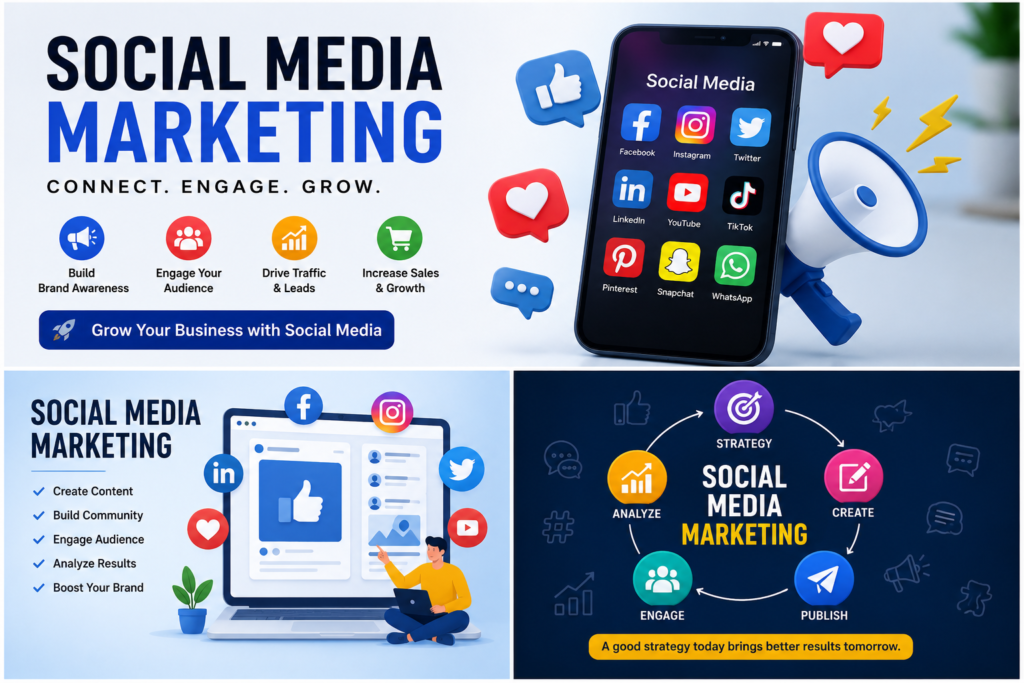
Top Online Media Platforms for Marketing
Different platforms serve different purposes:
- Instagram – Best for visuals, reels, and influencer marketing
- Facebook – Ideal for ads and community building
- LinkedIn – Perfect for B2B marketing and professional networking
- Twitter (X) – Great for trends, updates, and conversations
- YouTube – Best for long-form video content
Key Components of Online Media Marketing
1. Content Creation
- Images
- Videos
- Reels
- Stories
- Infographics
2. Consistency
Posting regularly keeps your audience engaged. Create a content calendar to maintain consistency.
3. Audience Engagement
Replying to comments, messages, and interacting with followers builds trust and loyalty.
4. Paid Advertising
Platforms offer targeted ads that help you reach specific audiences based on:
- Age
- Location
- Interests
- Behavior
5. Analytics & Performance Tracking
Use tools like insights and analytics to track:
- Engagement rate
- Reach
- Clicks
- Conversions
Why Social Media Marketing is Important
- 📈 Increases brand awareness
- 🤝 Builds trust and relationships
- 🎯 Targets the right audience
- 💬 Improves customer engagement
- 💰 Generates leads and sales
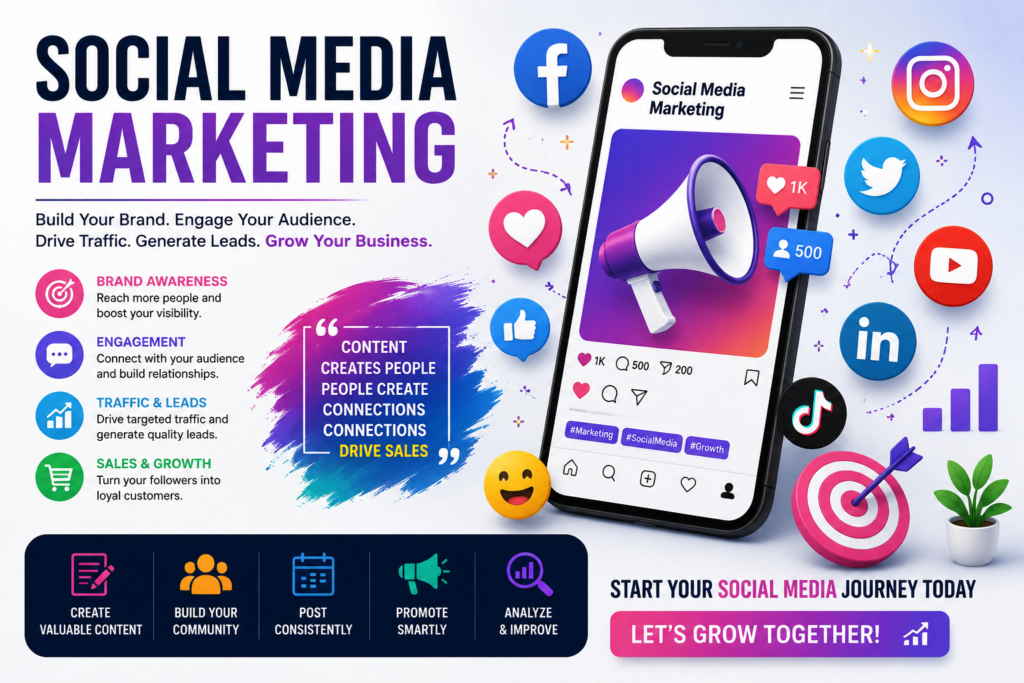
📈 How Social Media Generates Leads
Social media allows you to connect directly with potential customers.
👉 A good post → attracts attention
👉 Engagement → builds trust
👉 Call-to-action → converts into leads
Example:
A reel about “Digital Marketing Tips” can bring followers → followers become clients 💰
Powerful Social Media Strategies
- Post consistently (daily or weekly)
- Create engaging content (reels, posts, stories)
- Use trending hashtags
- Interact with your audience (comments & DMs)
- Collaborate with influencers
- Run targeted ad campaigns
Advanced Social Media Marketing Content
Understanding Your Target Audience
Before posting anything, you must know:
- Who is your audience?
- What are their interests?
- Which platform do they use most?
Types of Content That Perform Best
- 🎬 Reels / Short Videos (High reach)
- 📸 Carousel Posts (High engagement)
- 🧠 Educational Content (Saves & Shares)
- 😂 Memes (Viral potential)
- 📊 Infographics (Easy to understand)
Powerful Content Marketing Strategies
- Create content based on audience needs
- Focus on solving problems, not selling
- Use storytelling to connect emotionally
- Maintain consistency in posting
- Optimize content for search engines
- Repurpose content across platforms
Social Media Marketing Strategy Framework
A successful social media strategy follows a structured approach:
1. 🎯 Define Your Goals
- Brand awareness
- Lead generation
- Website traffic
- Sales conversion
👉 Without clear goals, your content will not perform effectively.
2. 👥 Identify Your Target Audience
Understand:
- Age group
- Interests
- Online behavior
- Preferred platforms
👉 The more you know your audience, the better your results.
3. 📍 Choose the Right Platforms
Not every platform is for everyone:
- Instagram → Visual + Reels
- Facebook → Local business + Ads
- LinkedIn → Professional audience
- YouTube → Long-form content
4. 🧩 Content Creation Plan
Create a mix of:
- Educational content
- Inspirational content
- Promotional content
- Entertaining content
👉 Balance is key for growth.
Weekly Posting Plan (High Value Section)
You can add this to make your blog more practical:
- Monday → Educational post
- Tuesday → Reel / Short video
- Wednesday → Carousel post
- Thursday → Tips / Tricks
- Friday → Promotional content
- Saturday → Engagement post (poll/question)
- Sunday → Story + personal content